Episode Transcript
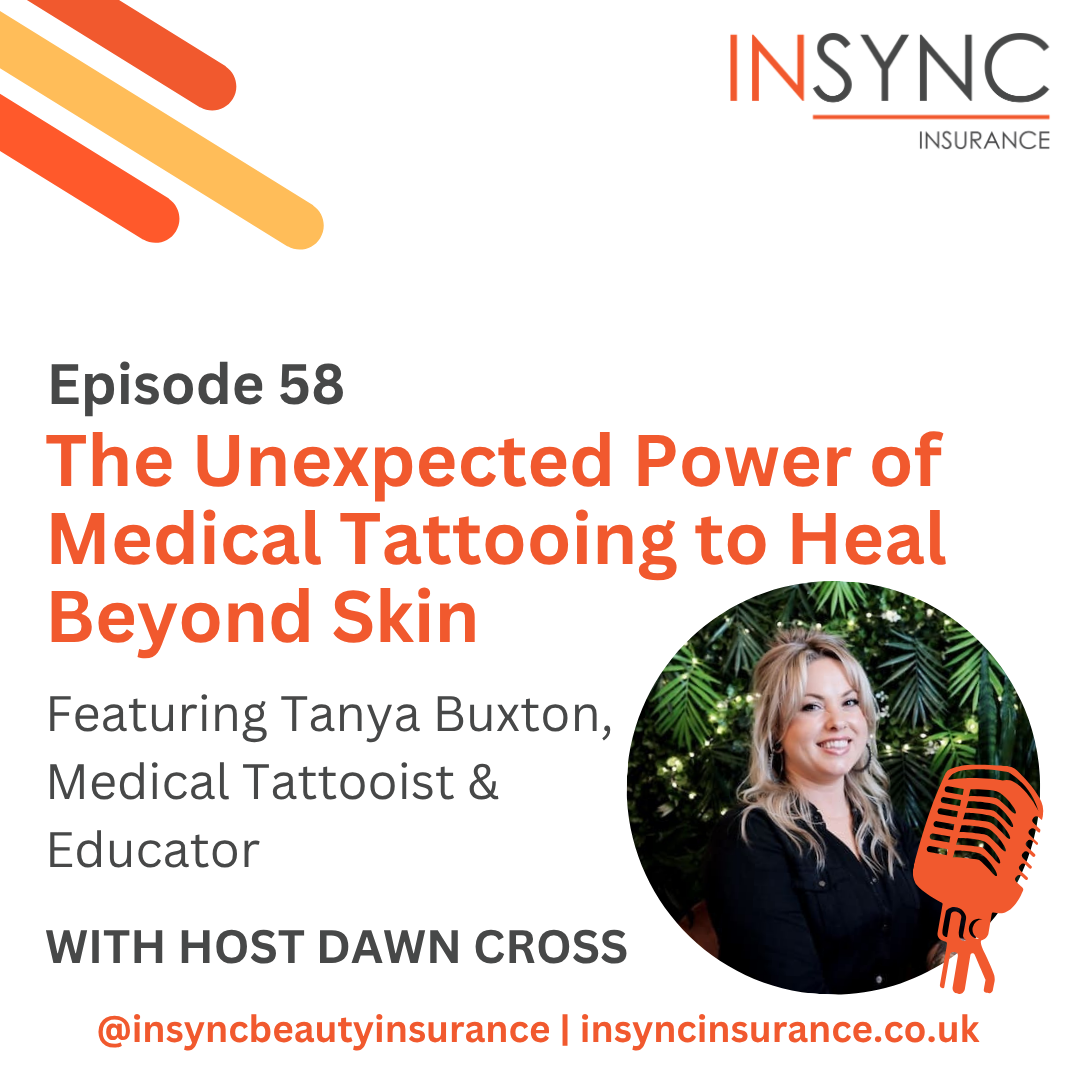
[00:00:02] Speaker A: Welcome to the Instinct Assurance Podcast. I'm your host, Dawn Cross, and today I'll be chatting about medical tattooing with guest Tanya Buxton, medical tattooist and educator.
If you enjoy our podcast, make sure to leave a rating on your favorite podcast directory.
Well, welcome to the podcast.
[00:00:20] Speaker B: If I could get you to start off with.
[00:00:22] Speaker A: With your name and your background.
[00:00:25] Speaker B: My name is and I'm a tattoo artist based in Cheltenham. I specialise in medical tattooing in particular. So I tattoo and sort of 3D areola nipples for people, scar camouflage, 3D belly buttons, scar cover ups. Yeah, you name it, I'll tattoo it.
That's amazing.
[00:00:48] Speaker A: Did you like going to tattooing?
[00:00:50] Speaker C: Always wanting to do that sort of thing.
[00:00:51] Speaker A: Is this something you were like, oh, actually not.
[00:00:53] Speaker C: This would be a great niche to get into.
[00:00:56] Speaker B: I've always wanted to tattoo in general, so I started off as a sort of traditional tattoo artist, if you like, which is what I've always wanted to do ever since I was a little girl.
I've always been quite creative and arty and things like that. And I've been Tattooing now for 17 years.
Just makes me feel really old.
I worked sort of with scar tissue and I did sort of mastectomy tattoos and things like that. So I think I've always been very aware of the healing and empowering element side tattooing and what it can do for people.
And then I branched into the cosmetic tattooing, so into the permanent makeup.
That would have been about 2010 now, I think, because I've always loved beauty and makeup and things like that, so it just seemed a perfect fit to combine the two.
And it was the cosmetic side, I think, that just really opened me up to a world of how tattooing can help people in so many different ways ways and sort of doing more specialist needs for cosmetic tattooing. So maybe people who had lost their brows through chemo and people that had alopecia and wanted their brows tattooing and things like that. It just led me into this more like, specialised world, if you like. And that was how I ended up sort of stumbling into the medical side of things. So it was never really part of the plan, but I absolutely love doing all that specialized stuff now and I think it was like the way it was meant to be sort of thing.
[00:02:32] Speaker C: This sounds absolutely amazing. I love as well is like, you know, you just kind of started going into different things and going, oh, this seems interesting. And then you just actually find something that at the end of the day gives you, like, such amazing satisfaction.
[00:02:45] Speaker B: Yeah, it's so rewarding, like any tattoo is really rewarding. Like when you see people being all happy and chuffed at their new tattoo or with their new nipple tattoo or their new brows, like, it's so nice that you're creating something that makes people happy. But the medical side of it in particular just has this whole other level of purpose and meaning, which is really rewarding.
[00:03:06] Speaker C: Definitely. So I think the big question today is, why is medical tattooing important? Obviously not everybody knows about it.
Some people may think it's a bit weird, kooky and that sort of thing. So tell us more. Why is it such an important aspect? And it needs to be everywhere and offered to people who may need it.
[00:03:27] Speaker B: For me, medical tattooing is a really significant part in a person's healing journey, whether that's after surgery or illness or some kind of trauma.
Medical tattooing can be used for so many reasons. It's not just nipples which people can get embarrassed about.
There's sort of this scar camouflage tattooing. I've done 3D belly buttons on people.
You know, someone's had a tummy tuck or different types of breast reconstruction. If they take tissue from the stomach to make a new breast after breast cancer, the belly button can be compromised in some kind of way.
You know, skin conditions like vitiligo,
[00:04:10] Speaker A: there's
[00:04:11] Speaker B: just like so many areas that medical tattooing can kind of come in and help, you know, as part of someone's healing journey.
I work quite closely with the gender diverse community as well.
And I just think for a lot of people it signifies like a bit of a new beginning. So, you know, if they've been through their surgeries or treatments or, you know, if they have been ill or, you know, injured in any kind of way, and that period of recovery has now passed and it's that new sort of phase of piecing yourself back together. I'm just feeling like you again.
That's where the medical tattooing comes in. So I just love being part of that really transform and restorative, like, chapter for people.
You really are impacting a person's confidence and well being and just how they feel about themselves. So it's not always about that physical aspect of the tattoo, what it's done to that person, you know, physically to their skin.
It's the huge impact it has on that person emotionally as well.
It's a very important part of someone's journey, I think.
[00:05:22] Speaker C: No, definitely. And I think as well as sometimes, like you're saying with kind of, you know, breast cancer, for example, you know, that's so solidly a part of your person, how you identify with your gender as well. So to have stuff taken away almost, you know, like, you don't feel like a whole person because unfortunately, things have changed due to, like, you know, you need to make sure that you're okay at the end of the day. And I think it's amazing as well, like, having the tattooing, like you said, with the 3D areolas and stuff like that, so brilliant for them because it's like you're finding your full self again and, you know, after recovering and going through that mental process of, you know, chemo or whatever treatment they've had to do for cancer, to have that sort of bit where they can find themselves again and start that new chapter as well just sounds absolutely amazing.
[00:06:14] Speaker A: Word.
[00:06:15] Speaker B: Yeah. I think a lot of people take with the nipple tattooing in particular, I think we take our nipples for granted. They're just sort of there, aren't they?
But I think speaking to a lot of my clients and patients in the hospitals and things, it's just not having those nipples there. It's almost like a reminder of what they've been through, and it's almost a way of reclaiming control over your body again. You're taking that part of your eyes back, and it just gives that focal point back to your chest. And it's almost about not looking at yourself sort of thing, and just not having people look at you twice because maybe something's not quite to the norm, if that makes sense. It's just about feeling complete again and giving people that inner confidence to, like, go swimming and get changed at the gym or undress in front of their partner or, you know, go on holiday and wear that bikini. Like, all these things that, you know, we do take for granted until happens to us that makes us feel that way about our body, and then it has this huge ripple effect, isn't it, kind of thing, when your confidence isn't what it was. So the tattooing really just gives you a piece of yourself back.
Yeah, definitely.
[00:07:38] Speaker C: So, obviously, this is such an amazing thing that you get up to, and I personally don't see enough of it being, like, offered anywhere. And I am aware of you do offer training as well, which is amazing. You can pass on those skills to any budding tattoo artist or those who want to need to go into that sort of thing. So what will the zeal training kind of like do and cover?
[00:08:00] Speaker B: Because obviously that'll be really useful for
[00:08:02] Speaker C: anyone who's maybe listening, thinking they want to niche down into this subject, but obviously, maybe there's not enough training out there because it's still something that's done on a very small scale.
[00:08:13] Speaker B: Yeah, I think there's training programs available out there for me.
I spent a lot of years putting my training program together. I'm very proud of the training program that I have put together. And I always knew that if I was going to teach this skill to people, it was going to be done well and it was going to be done thoroughly and it would be done over a period of time, because you can't teach tattooing to somebody in a few days, let alone a specialised aspect like the nipple tattooing as well. So for me, it's important those fundamentals of tattooing itself are learned and developed and understood thoroughly before you then start developing these additional specialist skills. So the training program that I've devised has been kind of tailored for all different levels and you would be with me for different amounts of time, depending on your kind of current level of experience.
But it's just, it's the whole package for me. You need to learn how to draw, you need to understand, you know, the fundamentals of drawing. If you can't draw a 3D nipple, how are you going to tattoo it on someone?
Understanding scar tissue and how that behaves and how tattooing and the skin interact with each other, not just when you're physically tattooing somebody, but during the healing and then as time goes on, because the ink is in that skin forever, essentially.
So it's a lot to learn and I think that can be overlooked quite a bit.
For me, it was really important about not producing a course that could be just kind of, you know, math taught to huge classes and churning students out here, there and everywhere. I take my time.
I've trained a small group of people, but I know that they've all had my one to one time and I've sort of trained them as best I'd to the best of my ability. And that ongoing support is there as well, because everyone is so different. Everyone's skin is different, scar tissue is different, people's journeys and treatments and stuff were different. So I think just really investing properly in that knowledge and just understanding how specialised it is, what you're doing is really important. So that for me was always important in my training, is that the time spent to learn properly 100%.
[00:10:43] Speaker C: I mean, there must be some sort of. It's got to be a very specialized skill as well to kind of do the colour matching, especially if you're doing scar cover.
[00:10:51] Speaker B: Ups.
[00:10:51] Speaker C: You can't just be pink and be done with it. It needs to be very specialized to their skin tone, isn't it?
[00:10:57] Speaker B: Yeah, there's a really complex colour theory behind it all.
Our skin is a complex colour in itself. Even when you're trying to paint a portrait on a piece of canvas, there's a lot of colours going on sort of thing, let alone the colors then influencing into skin as well, sort of thing. So for me it's understanding all the different aspects of colour theory and our skin and things like that. I delve into things quite a lot.
I think it's important and what we're doing.
[00:11:31] Speaker C: No, I think it's really key. And I think as well you relating back to the previous question is that this is so personal and important for people. So although, for example, if you're still learning tattooing, you know, God forbid, like slightly goes wrong, you can cover out with an extra piece of artwork, stuff like that. Whereas obviously, if you're working very realistic, very, you know, needs to be very on point tattooing, there is technically, you know, a lot of pressure, isn't there? And you want to make sure that you do it to a really satisfying way because not only is, you know, they're paying you for the service, but it's again, it's restoring that confidence and making them feel better, having that more complete and, you know, that is a lot of pressure.
[00:12:12] Speaker B: Yeah, it does hold a lot of importance to it and I take that responsibility really seriously when I. When not only am I tattooing, but when also I'm teaching my students because for me, my students are a reflection of me as well. So I always want to make sure I'm investing, you know, all my knowledge and all my time into that person so they can then be the best artist that they can be as well. Because these tattoos are super important to people and I've seen the other side of it when people have had areola tattoos that haven't turned out very well and the detrimental effect that has on someone's mental health and their physical, you know, their well being as well, it's almost worse than being there at all.
So it is important that it's done well, it's done knowledgeably and it's being respected sort of thing.
[00:13:07] Speaker A: No, 100%.
[00:13:09] Speaker C: Well, is there anything else you'd like to add before we wrap up today?
[00:13:15] Speaker B: Okay, so yeah, you can find me on social media.
My Instagram is just my full name, so it's Tanya Bookston.
You can find me sort of on Facebook and LinkedIn and things like that under my name as well and on my website, which is tanyabookston.com and you can also find my tattoo studio based in Cheltenham. It's called Paradise Tattoo Studio.
You can find our website and Instagram and things there too. So there's a whole team of us in Cheltenham that do this wonderful work as well.
[00:13:50] Speaker C: That sounds amazing.
[00:13:51] Speaker A: At least you know people can have
[00:13:52] Speaker C: a little bit of a stalk and
[00:13:53] Speaker B: check out all the work that you get up to.
Yeah.
[00:14:00] Speaker C: Well, thank you so much for coming on today. I really appreciate it and you sharing what you do with medical tattooing, I think it's really interesting and amazing and more people should get involved and give it a go.
[00:14:11] Speaker B: Yeah. Thank you for raising awareness to it. It is a really, really important service for people.
[00:14:19] Speaker A: Thank you to my guest today, Tanya, for chatting about her amazing work as a medical tattooist and the impact of with second life clients. If you'd like to know more about her training, please click the link in the description.
I have been your host, Dawn Cross and tune in next week for another episode.
Insync is one of the UK's fastest growing insurance providers offering comprehensive cover for SMEs and self employed across the UK.
Our expert team can tailor your insurance, meet your individual business needs and compare prices from employees of London and Pre department.
We offer a five star service that has been FIFO Platinum trusted winners five
[00:14:54] Speaker C: years in a row.