Episode Transcript
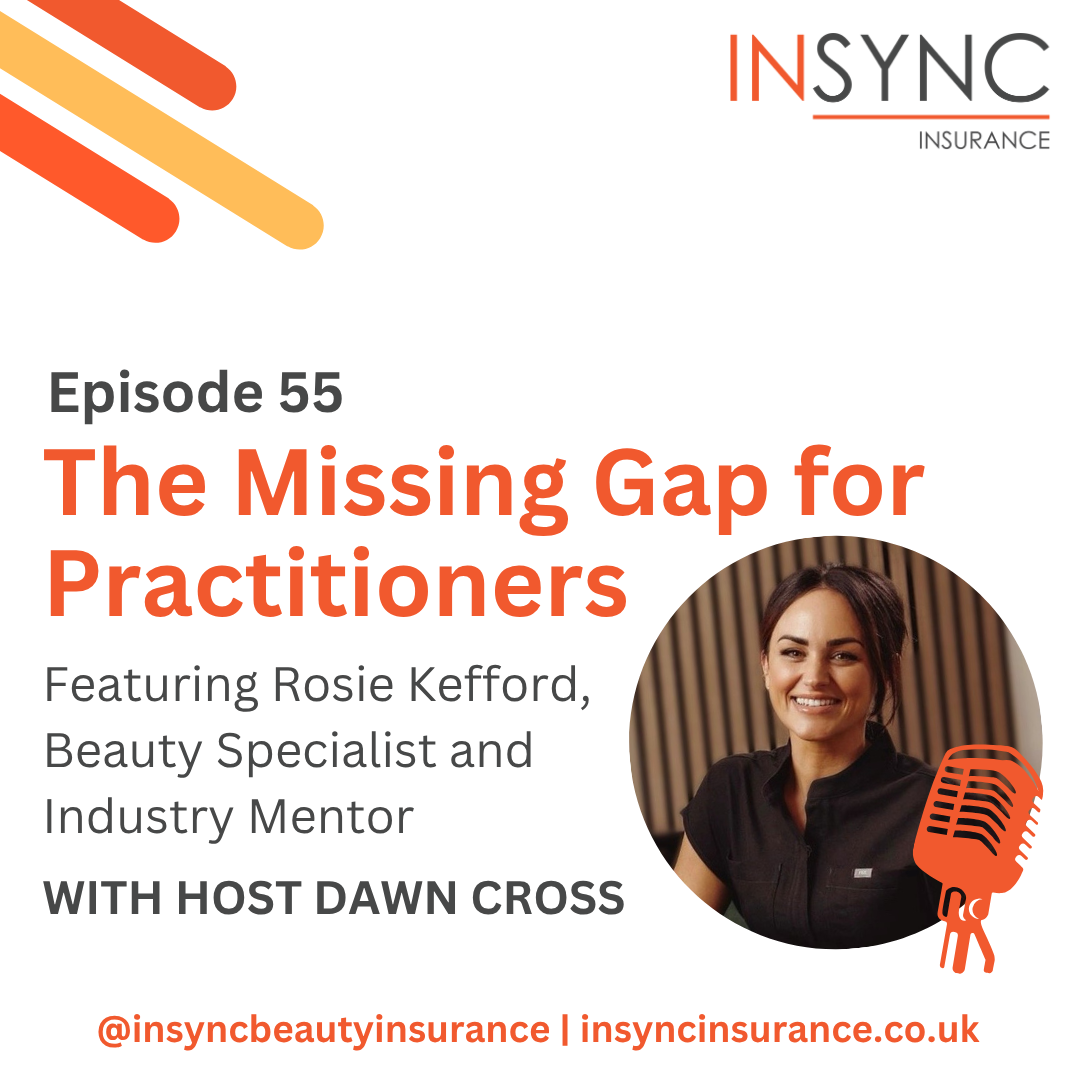
[00:00:01] Speaker A: Welcome to the insync Assurance Podcast. I'm your host, Norm Ross, and today I'll be chatting about the missing gap for practitioners with Rosie Kefford, beauty specialist and industry mentor of 20 years.
If you enjoy our podcast, make sure to leave a rating on your favorite podcast directory.
[00:00:18] Speaker B: Zoe, welcome to the podcast. If I could get you to start off with introducing yourself and what you.
[00:00:23] Speaker A: Get up to in your business.
[00:00:25] Speaker C: Yeah, sure. Well, first of all, thank you for having me on. I'm so excited to be here and be able to talk about my journey and what I've been up to in the past 20 years.
But my name's Rosie. I've been a beauty therapist for 20 years.
I was employed for a few years before I decided at the very young age of 20 years old that I wanted to start my own beauty business.
At that age, I had absolutely no funding and also no idea about how to start a business, but I went for it and I opened a mobile beauty business in my area, which then led on. In the past 15 years, I've gone on to open four salons and also a beauty academy as well, called Niche Beauty Education.
So it's been very full on, very unexpected, but really, really good. And in that, in that time as well, I've won some industry and business awards as well. So really trying to make my mark on the industry and now just go further into education to help others.
[00:01:25] Speaker B: So, yeah, wow, sounds amazing. Have you had a holiday in between all of that?
[00:01:31] Speaker C: I try, I try. I'm always on the work life balance of that, but yes, no, I think holiday is so important. Back in the early days, it's something that I just didn't do, I guess, before children. I've now got two boys as well, so obviously they're my priority. But yeah, I mean, before that I used to work way too many hours, but looking back, I feel like that's just what catapulted me into being able to open these salons and put those hours in. But yes, very much mid-30s now. All about work, life, balance, taking it easy and picking in those holidays.
[00:02:05] Speaker B: No, that's good.
[00:02:05] Speaker A: I'm good.
[00:02:06] Speaker B: It's really commendable as well how far you've come from, you know, the very beginning to, you know, you were just like, brilliant. I'm just going to go do stuff, you know, for salons. You're now teaching as well, which is amazing. Which brings me to my next point. You know, tell me more about niche education and like, what is it that you get up to within the Training aspects?
[00:02:26] Speaker C: Yeah, sure. Well, niche had actually been in the pipeline for over 10 years. So back in 2013, I was only 22, 23, but I was offered a job at my local college and to do my teaching qualifications, which I absolutely love. So I became a beauty therapy lecturer and assessor. I taught level two beauty students and I loved it. I loved it so much. But there was just little bits that I wanted to teach more of because I was also an employer. I had two salons at that point. There was so much that I was teaching, but I realized there's so much more they need to learn before they go out into the industry.
So I had the idea of starting my own academy, but had a baby. Then Covid happened and then all of a sudden this plan turned into 10 years before it developed. But it's been so good to actually have that time to redevelop it in my mind and decide what exactly I want niche to be about.
So now niche is rather than just beauty courses, it's we focus so much on upskilling beauty beauty therapists. So when they've gone and done one day courses or whether they've gone to college, our upskill courses just help them develop more of the skill that they want a niche in, basically. So skincare brows, microblading, we also do semi permanent brows as well.
So yeah, we've done a lot of face to face upskilling with students and it's just helped them grow their business, which has been amazing. Finding their niches allowed them to grow their business but also earn more money.
But most recently I have really started focusing on reaching more people online. So this is all new for me online, but I'm absolutely loving it, seeing more faces.
And my courses now there's a lot of free workshops that I'm offering to those who are either already in the industry or thinking about starting up their own business. And these online workshops basically take all of my knowledge from 20 years and help beauty therapists find clarity and direction on where on earth to start, because it's a minefield. But there's more and more of beauty therapists that want to go self employed. I'm seeing that as an employer myself, I put out adverts for staff for employment and people come back to me and they say, I want to work with you, but I want to be self employed.
So it's really big at the moment and I just feel like there's a massive gap between education and self employment as well as employment. There's that gap of what is to be expected of yourselves in a salon, but also how on earth to start a business by yourself. So that's what my online workshops are about now. Just helping bridge that gap and helping those basically start up their own businesses with confidence and a bit of clarity as well.
[00:05:13] Speaker B: That sounds amazing. I think it's what's key with like, even if you're in beauty, if you want to become an architect, you know, education courses are brilliant. They teach you how to do the job, but then you don't teach you the, like you said, the areas around the job. So you know how to do kind of taxes, how to do accounting side of things. Like just kind of business management. Obviously if you need to like order supplements, supplies, you know, the marketing side of things. Do you need to market yourself or like, you know, you need to at least create content that the salon can use to help market you.
All of that stuff isn't really necessarily included in a lot of today's courses that we see.
[00:05:49] Speaker C: Yeah, yeah, absolutely. And I feel like it's as well from being in the industry for 20 years. Oh my gosh, how different it is from when I started out. There was no Facebook, really. I had a Facebook account, but we absolutely never used it to promote ourselves. And now it's almost like our social media is our part time job as well. And it's something that people have to realize that actually it's the most fantastic tool.
So to be able to help others get to grips with social media as part of like the business training, it can completely catapult them into being more visual, get more bookings. Like all of my bookings when I work, I still work in one of my salons and I, all my work comes from Instagram. It's like my online portfolio to see all my semi permanent browse that I do. So that part of it is hard work, but it is such an important part of business as well that you're just not taught in colleges or on these sort of beauty courses. So yeah, there's lots to teach.
[00:06:48] Speaker B: I mean, obviously technically, you know, it's not necessarily a requirement for those courses to provide that. Like, you know, when you're getting ready for stepping out and being like, right, okay, I can, I'm trained, I can deliver these.
[00:06:59] Speaker C: Yeah.
[00:07:00] Speaker B: Results. But then you're like, okay, but like actually where do I start with? Is what a lot of people are struggling to find nowadays.
[00:07:08] Speaker C: Yeah, absolutely. I think it just, it's so overwhelming. I think, you know, you get them qualifications and you're like, right, I'm Ready to start now. But then when it comes to it, the to do list of actually starting, ah, well, I need this social media account. Well, I need a Facebook and I need an Instagram and I need this. And you know, there's so much to it. And I just hope that with some of these, especially the free online workshops that I'm providing, I hope that I can maybe help with those checklists. I'm actually providing those checklists for others so then they don't have to go through the overwhelm feeling. There's nothing worse, you know, the overwhelming feeling because you've got all the skills, like let's get them put to use rather than struggling right from the off.
So yeah, I totally agree with that.
[00:07:48] Speaker B: That's amazing. So I guess like the million dollar question today is, you know, what can practitioners do for the jump into employment after they have been trained and qualified?
[00:07:58] Speaker C: Yeah. So I personally think there's nothing better than to make a plan. I think that myself when I left college it was just, let's get a job, we just need a job. Like that's just everyone, that's what everyone ran to. And I mean there's nothing wrong with that because it's so good. You do need to go and find employment ideally. I personally was employed for I think three years until I decided to go self employed and that was so valuable to me. I learned so much from my employers and I got all of that experience without the stress of like going off straight into self employment without any of that.
So it's so valuable being employed first to get that experience. But I think that looking back, it is quite good to make a plan and I've, I've done that throughout my business writing down exactly what you want to achieve and you haven't got to think 10 years ahead, but just think, you know, a couple of years ahead once you've done your training, you know, if you really enjoy the massage side of things, focus on looking for a spa to work in, you know, and then you can find if that is what you really, really love.
And yeah, I just think planning ahead and researching but also practicing. I think that once you've done your training, it doesn't stop there. There are so many courses. I think that's the best thing about beauty, the beauty industry itself. I've got over 50 certificates now in beauty therapy in those 20 years because I just never stop learning.
And I think my best advice would be for those who are coming out of training to then go into employment, look for an employer that is going to offer you more training, who's going to keep developing you as a beauty therapist?
And if you don't want to be employed, look at what other courses you can do to keep developing yourself. Because the industry is changing so quickly. If I was still doing my qualified courses that I learned 20 years ago now, I'd have some clients, but I wouldn't be shifting with how the industry is shifting. So making a plan, looking to further train and look into employers who offer you opportunities as well, because at the end of the day, you want to grow as a beauty therapist. So that would be my best advice, I'd say.
[00:10:06] Speaker A: As well.
[00:10:07] Speaker B: Again, you know, linking in, obviously, you know, with niches and stuff like that is, you know, if you find you're really, really good at something, training more into that niche. Because there's like, certain techniques and there's people who are like, oh, don't, you know, dare I say, the most top world experts that do come along, they actually kind of travel to different countries to help teach certain techniques, especially when they're doing kind of like reconstruction of things. You know, we spoke with someone quite a while ago who helped with like, areola reconstruction and tattooings then, you know, those who were breast cancer survivors can still feel as normal as they can do. And she would go around teaching those techniques. And it's like, you know, if you're passionate about something or you're really wanting to niche down, further training with those people who have perfected the techniques, like over 20 years or so is something that's gonna always be beneficial because then also, you know, you can offer more to your clients, but also you can probably charge a bit more because you've trained such a high standard that you can deliver the most amazing results. Like, you could probably get a bit more money out of it. I think that would be fine.
[00:11:18] Speaker C: Yeah, absolutely. I mean, I discovered that actually having a niche, we, we've always, in my salons, we've always offered all beauty treatments. But it wasn't until I had my second little boy in 2022, I was so restricted with coming back to work. I was so restricted on hours, I couldn't get into nursery very long. And it was like, if I go back doing the odd eyebrow wax or the manicure, I just wasn't earning enough to even cover the nursery bill. Like, it's expensive.
So it's where I kind of, within Covid, I trained to do semi permanent brows. And I sort of decided it was a big leap because obviously I thought I could actually lose clients here by niching down.
But luckily I had a team behind me who was still doing all the beauty treatments, so I was in a position where we could still keep our clients happy.
But yeah, I came back after maternity leave and I was like, I'm only doing semi permanent brows now and I thought, I'm going to try it, see what happens. It was the best decision I've ever made in my career because my bookings just went wild. Like when you say you're only doing something, you're a specialist in something, people specifically search for that. But also when you're only doing that day in, day out, you become so good at it. And I'm so well known now for my semi permanent hair stroke brows. That is all. Now that I work more hours, it's all my diaries full of and booked up in advance for a couple of months now.
So I think niching down is a really good thing to look into. But also I do think that after you've done your college training or your qualification, got your qualifications, it's so good just to try everything.
Don't work in a salon where you can do all of those treatments, rather than finding your niche straight away, like go into employment where they offer you to do all treatments so you can actually decide what you enjoy doing the most.
[00:13:05] Speaker B: But yeah, definitely, I think as well is that, you know, you might find a treatment that surprises you that is, you know, actually this I've got a real knack for, for this. Or you, you know, dare I say, even create a whole new technique that isn't really seen yet as well. Like, you know, it is constantly evolving, like you said, and people are experimenting with new things. There's obviously new products that do come out onto the market that can be worked with, you know, with nails, there's obviously different categories within that. And then obviously the nail art and everything else, like loads of people are constantly evolving the process and techniques. So being able to do that and then eventually, yes, you do find it, niche is, you know, an amazing way to build up your career.
[00:13:47] Speaker C: Yeah, yeah, no, I totally agree. And I think the best way to keep on top of like our changing industry is visiting the beauty shows. I go, I've gone to professional beauty for 20 years, every single year, apart from COVID And it's just, gosh, the way that that has evolved over 20 years. I think that gap between Covid when it was on and then going to it and it was just all electrical facials and equipment. I think, gosh, back when I was at college, There was nothing really like that, but, but visiting shows, keeping, keeping on top of social media to like follow the brands, see what they're doing and it just gives you an insight of what's coming up, what might be exciting for you to try and to train in.
But it's. I think it's really important to just stay consistent and keep an eye on trends but don't follow each one because it's going to be costly, like follow your heart more than the trends as such.
But yeah, definitely keep an eye on everything that's happening. That's what I do.
[00:14:48] Speaker B: Well, thank you so much for imparting all your knowledge so far today. I guess the last question I have for you is what else would you like to add to those who are maybe in training or post training or maybe looking to go back and retrain, you know, what would you say to those people? And also like, what is your weaponise about?
[00:15:07] Speaker C: Yeah, so I would really suggest anyone who's especially thinking about doing training, I think the best place to learn is college because you get the years experience with it. You actually get to work in a real working environment.
If you're looking into doing the short courses that are available without any previous beauty experience, have some practice time backed up with that, like after you've done them courses, it's not enough to then have you ready to start charging, make sure you are ready with some models to practice on straight after your training. There's no better way than getting stuck straight in as soon as you've done that training.
But really research the courses that you're doing as well. I think it's really important to make sure that you're. Especially with our regulations possibly changing next year, that's so important to look into to make sure you're doing an accredited course to make sure you're then insurable. That's so important because without that, that course will not be any use to you in the future.
So yeah, again, research plan, really think, look online, try and get to some beauty events to look into.
Always give you inspiration on what it is that you want to do.
But yeah, with my webinars, so the one today that I've got midday today in just over an hour is your virtual beauty bestie. So I, when I went through college and when I've started up all my businesses, I literally did it completely by myself, didn't have anyone to talk to. Like beauty mentors is now becoming such a big thing, but they're also very expensive and I just feel like I have such A deep passion of wanting to help others where, where it's affordable, where I can give my knowledge for free. It's an hour of my time today, which I have got so many people signed up to this course, which is so incredible and I hope they can take away some, like, clarity and almost like a roadmap on. Right. Actually, I now know where I've got to start. This is what I've got to do. But, yeah, from today's workshop, it really focuses on just getting clear on your goals. It's a lot about planning. I've actually, at the end of my workshop, got some free downloadables for everyone who comes along just to help with planning. Like, there's no better thing, I think, than having a plan.
So, yeah, planning is my main one on that. And then going forward, there's going to be loads more. Now launching just to help specific things, to help employers with stuff. That is a massive thing as well that I have had pros and cons, cons with and also to talk further about training, to talk about how to actually start a business.
So, yeah, I'm hoping I can just give as much knowledge as I possibly can through these workshops and going forward.
[00:17:51] Speaker B: That's brilliant. Well, thank you so much for coming on today. It's been really great to hear all about your experience and, you know, what you do to help others.
[00:17:59] Speaker C: Thank you. Thank you so much for having me.
[00:18:03] Speaker A: Thank you to my guest today, Rosie, for chatting about how she bridges the gap for practitioners after they certify and enter into the world with their business. If you'd like to know more about her webinars and what she gets up to, please click the link in the description.
I have been your host, Dawn Cross, and tune in next week for another episode.